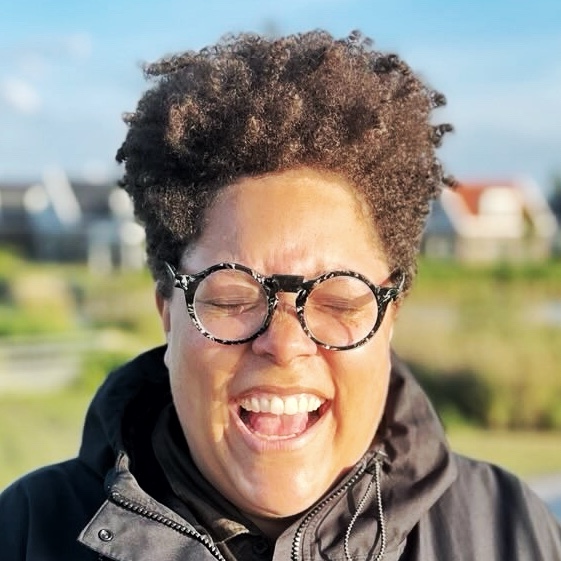
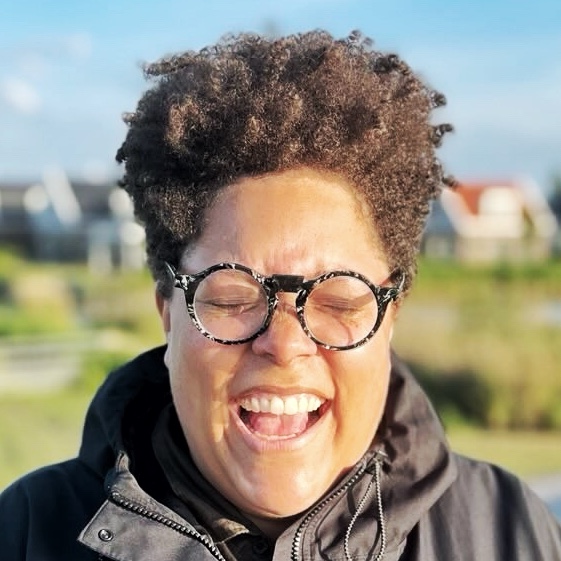
A person laughing with their eyes closed, Dutch landscape in the background

Everything about Language

Dog whistles

Something is happening in the neighborhood. It’s not a new thing, it’s just more vibrant now, for me at least, I think. My friend, while walking his dog, is assaulted around the corner. Three kids beat his eye socket with a metal bat, shattering it. Various cameras film it. Nobody is caught. To watch someone develop PTSD right in front of you.

Brunch with new acquaintances in the neighborhood, fellow corgi owners. The woman decided her future mother-in-law was weird for not liking dogs. It disappointed the Libanese man, who eventually found it in his heart to overlook the initial character flaw. On dating apps, the woman found it most effective to set her filters exclusively to Middle Eastern men. She recounts all the times Muslim kids in the neighborhood responded poorly to the dog.
Terms of inclusion, short and long

My coworker Mattia is a gem; a man of deep thought and good ideas. He asked me today if I knew of any writing on the topic of language learning and inclusion.

One trait common in Dutch speakers (at least in the Randstad) is that, as soon as a non-native speaker joins the conversation, they will switch to English. I can speak only for myself: it’s an act of inclusion, of liberation. I want expats to feel at home in the Netherlands, and autonomous in their manner and pace of learning Dutch. Forcing them into it over lunch, which is a time to relax, is not something I’m fond of doing.

Maker's marks for King's Day

It’s late in the morning and I’m on my way to Gerimedica, the company’s I’m excited to be joining in May, which is next week already. I’m on my bike listening to an American podcast about the history of Dutch anarchist cycling culture.1 The scene could only be more Dutch if I had a frying pan with bitterballen on the back of my bike.

The commute is wonderful: it takes me from the East side of Amsterdam via De Pijp and Vondelpark to perhaps the most beautiful building I’ve ever had the privilege of calling my office. I cross the river Amstel, enjoy the sun, and marvel at the preparations people have been making.

Come back to Chigaco

Spring is here, I think? I spend the afternoon in the park with ex-colleague-turned-friend Susan, who is celebrating landing a new and challenging job. There’s a boy in the park who’s walking around barefoot. Later we see him on a slack line. I like this scene; it tells me that summer is almost upon us.

I never seem skilled at enjoying whatever season is here. Instead I’m forever yearning for what’s just out of reach. On Javastraat I pass a travel agency, the target audience of which most certainly is concerned with visiting Morocco or Turkey during the summer months. Surprisingly, there’s a wide array of names that would inspire city trips around the world.

The game show

This morning I got acquainted with the immigrant anxiety felt by Chinese-American journalist Jiayang Fan about her desire to speak accentless English. In an episode of one of my favorite podcasts, This American Life, Jiayang participated in a game show designed around a talent she claims to possess: the unique ability, inspired by her anxiety, to tell at what age a Chinese-American person came to the United States. The show gave her recordings of three people to prove herself. (She got 0 out of 3.)

`alt` text culture

More than any other time in my online life am I aware of the value of alt text. I make a point to write image descriptions whenever I can. Kind strangers with a variety of accessibility needs have been helping me understand how to best capture my interpretation of an image. I’ve come to regard alt text as the secret side bar I get to have with blind people and others who need it.